Monday, September 24, 2012

New Picnic Tables

Picnikers enjoy the new tables.

View from the picnic shelter inclues Baker Valley and the Elkhorn Range.
Trail Tenders recently purchased several new picnic tables for the picnic shelter at the Interpretive Center. For twenty years, it's been one of the most scenic spots around for a great picnic; and now, you can enjoy the view and lunch with no splinters!!!

Friday, September 21, 2012

Trails Through Time Exhibit

South Pass by Bob Wick
A special photography exhibit titled "Trails Through Time: Contemporary Photography of the Oregon Trail" is now in the Flagstaff Gallery, through November 12.   With over 50 images from 16 photographers at over two dozen locations along the Trail, the collection of images captures how the trail looks today.  Photographers were invited to submit photos along the theme of reimagining the Oregon Trail, and capture what a pioneer might have chosen to record if they'd had modern camera equipment in their wagons.


Friday, September 7, 2012

Scenes from Labor Day Weekend Wagon Encampment

We had a great wagon train encampment, with several hundred visitors, good weather, cooking, mountain men, ox drover and team, blackpowder shooting, trade camp, mountain men, medicine on the trail, music and dancing,  and games from the Trail Days.
Mountain man Mike skinned a deer hide to make some rawhide to back a bow.  He wet the skin, and then scraped off hair and first level of the skin.  It takes about an hour to do this. Although there are different techniques, he shared that this is one of the simplest for making rawhide.

Brian and Charlotte showed the types of food and basic "mess kit" used by pioneers with limited space on their wagons.  Dried foods, coffee, tea, and the versatile cast iron cookpot. Not a lot of culinary variety, but it kept the pioneers going.


Kelly and Grace cooked beans and served biscuits, sticking to authentic cooking techniques and cookware available in the 1850s.  Notice the tinware pans and canisters?  This is what was used before plastic storage containers were available.  Crockery was also used, but tinware was unbreakable, and kept out rodents and insects. Wooden bowls were also unbreakable - important for bumpy wagon travel. Because there was not always enough fuel or enough time to build a hot fire for cooking a pot of beans, pioneers might make a big pot of beans and a big batch of biscuits every three days or so, keep the leftovers in the pot in the wagon, and eat cold meals the next few days.


This young man is checking out the equivalent of a frontier shopping mall....this is how mountain men might have set out trade goods at a rendezvous or fort along the Trail.  Beads, firearms and knives, clothing and blankets were prime trade goods.


Thursday, August 16, 2012

Getting Ready to Cook at Wagon Encampment

Our Labor Day Weekend Wagon Encampment is coming up September 1st & 2nd. Our interpreters are getting ready to re-create pioneer lifeways. Bullwhackin Kass will be there with her ox team, the mountain men will set up camp and possibly making jerky, and our dutch oven cooks will be preparing trail side foods such as stew, biscuits, and cobbler.

One of the big preparations is all the research by our interpreters to recreate pioneer cuisine and answer questions about what
people ate, why certain foods weren’t available, and how the technology of the day affected food choices. One of our favorite resources is the books by Jacqueline B. Williams. Her in-depth research combines American history with the daily realities of food. "Wagon Wheel Kitchens: Food on the Oregon Trail" has information on what was eaten while traveling overland. "The Way We Ate: Pacific Northwest cooking, 1843-1900" covers how settlers and homesteaders fed themselves after arriving at Trail’s end.

If you are preserving food from your garden this time of year, you’d be fascinated by the variety of techniques used by our ancestors to dry, jelly, and pickle food using whatever ingredients and resources were available. The chapter on flour will give anyone new appreciation for the abundance our country enjoys today, even though many think we have shortages! The books include creative pioneer recipes and instructions for substitutions to deal with scarcities of eggs and sugar, or how to turn an abundance of apples and tomatoes into a substitute for almost anything.


Hope you can come visit with our frontier cooks September 1st and 2nd! And if you love cooking and American food, think about picking up a copy of one of the many frontier themed cookbooks in the Oregon Trail Shop.


The Way We Ate: Pacific Northwest Cooking, 1843-1900 by Jacqueline B. Williams. $22.50.

Friday, July 20, 2012

Bridges Between Past and Present

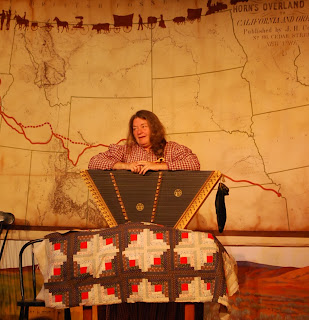
One of the wonderful things about a place like the Interpretive Center is when our visitors find an emotional connection to our programs or exhibits and share it with others around them.

In Linda Russell's living history program yesterday, an older gentleman in the audience was so moved as to shout out “Momma!” during the middle of the show. At the end of the performance, the visitor explained in a voice filled with emotion that his mom sang like a bird, and Linda had just brought her back to life. His confession moved many others in the audience to respond in a similar manner, and everyone present was very touched by this brief experience.

We’re sharing this story to remind ourselves of how special those moments of connection between the past and present are, and how they can turn up in the most unexpected of places.
Wednesday, July 4, 2012

Independence Rock Fruit Cobbler - Dutch Oven Recipes

Independence Rock Fruit Cobbler

Oregon Trail Pioneers didn’t eat this well every night – but they did stop traveling and take time to do pies, cakes, and cobblers for a 4th of July celebration at or around Independence Rock.
(approximately 10 plated servings, or 30 small sampler servings)

#12 Dutch Oven

Filling:

  • 6 cups fresh or 4 cups dried fruit – sliced. Okay to leave on peels. Apples, apricots, peaches, and berries all work well.
  • 4 tablespoons butter
  • ½ cup all purpose flour
  • 2 tablespoons cinnamon
  • 1 teaspoon nutmeg or mace or ginger
  • 3/4 cup sugar
  • Water as needed to re-hydrate if using dried fruit.

Topping:

  • 1 cup all purpose flour
  • ¼ cup whole wheat flour
  • 1 teaspoon baking powder
  • ½ teaspoon soda
  • 2 tablespoons melted butter
  • Dash of salt
  • 1 cup buttermilk
  • 3 tablespoons cinnamon

Basic Instructions for Fruit Cobbler:

  1. Clean, slice, and prepare fruit by mixing with sugar (about two tablespoons per cup) in a mixing bowl and setting aside. Just before adding to cook pot, add melted butter and flour, and mix thoroughly. As you wish, add seasonings such as cinnamon, salt, nutmeg, or ginger to your taste.
  2. Warm the cookpot, melt enough butter to coat the bottom, add fruit, and enough liquid to prevent the fruit from sticking to the pot, cover and stew the fruit until soft. Check occasionally and add water if needed to prevent the fruit from burning.
  3. Prepare the topping, which will be “dump” poured or dropped from a spoon over the fruit. Combine one part flour, ½ part sugar, teaspoon per portion of baking powder, ½ teaspoon soda, dash of salt and stir in one part buttermilk, and dash of melted butter. Stir until well blended, smooth, and fairly elastic.
    • You can get creative here and add spices such as cinnamon, nutmeg or ginger to your topping as you like.
  4. When fruit mixture is bubbling and has some syrup like consistency, dump or spoon drop the topping on top of the fruit. You may need to remove the cover and let some of the liquid boil down before adding the topping. Once you have added the topping, sprinkle with additional sugar and cinnamon, if you like your topping sweet.
  5. Cover the pot. Shovel coals over lid, and keep up from the heat a bit.
  6. Check occasionally to see when topping is lightly browned and firm.

Reminders:

Let food cool before serving – this stuff can reach very hot, mouth burning temperatures pretty quickly.

We serve this outside at National Historic Oregon Trail Interpretive Center at Baker City, in a beautiful setting, to an audience that is here to have fun and learn about pioneers – so it’s pretty hard to go wrong with the results! Have fun, and the food is almost guaranteed to taste good.

If anyone complains, tell them the story about the Donner Party.

Saturday, June 16, 2012

Home! Sweet Homestead!


Our new exhibit opened in the Flagstaff Gallery on June 7th, celebrating the 150th Anniversary of the Homestead Act. Visitors have been sharing their homesteading stories with us in the gallery, and we will be adding them to this map all summer.

If you have a story to share, add it in the comments section, and we will create a map point for you!

View Home Sweet Homestead Stories in a larger map